
Filter Holidays
Find your
next holiday
Filter
Holidays
Sign Up to Emails
Subscribe to our email newsletter and find out the latest news, updates and offers first!
Japanese Textiles and Yokohama World Quilt Festival
15 days from £8,235pp
Your Tour Includes
- Company and expertise of Janice Gunner throughout the tour
- Entrance to Yokohama World Quilt Festival
- Return flights from London to Okinawa (via Tokyo) and Tokyo to London, 1 piece of checked-in luggage and airport transfers
- Internal flight from Okinawa to Fukuoka with 1 piece of checked-in luggage
- Bullet train from Fukuoka to Kyoto and Kyoto to Tokyo, with luggage transfers by road
- 13 nights bed and breakfast accommodation
- 2 dinners
- Entrance fees, private coach travel and activities as described in the itinerary
- Services of an experienced Tour Manager
- Services of an English-speaking local guide
Experts

Holiday Overview
Embark on a journey through Japan, where centuries of tradition meet modern craftsmanship. This textile tour will take you to four distinct regions – Okinawa, Fukuoka, Kyoto, and Tokyo – each offering a unique window into Japan’s rich craft heritage. We begin in Okinawa, where the vibrant colours of Bingata textiles and the intricate art of Ryukyu weaving reflect the island’s subtropical spirit and cultural history. Then travel to Fukuoka, known for its exquisite Hakata-ori silk, a fabric steeped in over 700 years of weaving mastery. In Kyoto, Japan’s ancient capital, we’ll immerse ourselves in dyeing techniques and delicate handcrafts that have defined Japanese aesthetics for generations. Finally, we’ll experience the dynamic blend of tradition and innovation in Tokyo, finishing with a full day at the World Quilt Festival in Yokohama.
Image Gallery




Itinerary
Please choose your preferred 15 day itinerary
Meet Janice Gunner and your Tour Manager at a London airport for your overnight flight to Okinawa via Tokyo.
On arrival at Okinawa Airport, we will meet our local English-speaking guide and transfer to the hotel.
This evening, join Janice, your Tour Manager and fellow guests for dinner at the hotel.
Included Meals
- Dinner
Okinawa is Japan’s southernmost prefecture. Known for its turquoise seas, coral reefs and distinct cultural heritage, it feels noticeably different from mainland Japan. Okinawa consists of over 150 islands, with Okinawa Island, where we will be based, being the largest and most populated. Historically, Okinawa was the centre of the Ryukyu Kingdom (15th-19th century), an independent maritime state that traded widely across East and Southeast Asia.
Okinawa is home to 16 nationally designated traditional crafts, 13 of which are dyed and woven textiles. Developed during the Ryukyu Kingdom era (1429 to 1879) through regional innovation and influence from Asian trade, these textiles reflect the cultural and environmental diversity of the islands. Each region nurtured its own techniques and styles, resulting in a rich variety that has shaped Okinawa’s textile culture today. We’ll explore some of these during our stay, as well as enjoying some free time for relaxing and personal sightseeing.
Bashofu is a traditional, handcrafted banana fibre known for its cool feel and unique kasuri (ikat) patterns. Once a widespread craft, it is now preserved primarily by the women of Kijoka village. Here, we’ll learn about the complex production process; from the cultivation of the ito-basho plant to hand-spinning, dyeing and weaving the fibres into beautiful fabrics for kimonos and other goods.
Historically reserved for royalty and the samurai class, Bingata is a vibrant, traditional Okinawan stencil dyeing technique using plant-based dyes and mineral pigments, known for its bold nature-inspired motifs in bright colours. We’ll visit the studio and shop of bingata master Makoto Fujisaki and try our hand at this traditional dyeing technique.
Ryukyu Kasuri Hall is the centre for traditional Okinawan kasuri (ikat) textiles. Here, we’ll learn about the history of Ryukyu Kasuri and discover how artisans use unique methods like tying (kuri) and stenciling (ezu) to create patterns related to Okinawan life.
Founded in 1996, Shiyon Weaving Studio was born from the collaboration of four skilled weavers. Weaving is done by hand using natural materials and traditional Okinawan techniques. Each weaver designs their own products and dyes their own threads, using both chemical and natural dyes. As we visit the studio, we’ll see some of the processes involved in crafting these high-quality, colourful items.
We’ll also visit Okinawa Prefectural Museum, a great place to learn more about Okinawa's unique culture and the studio of Seikichi Inamine (1940–2021), a highly renowned Okinawan glass artist who is often considered the most famous Ryukyu glass artist. His legacy is now continued by his son, Seiichiro. Ryukyu glassware boasts extremely unique designs and vivid colours that reflect the island’s natural beauty. Inamine’s glassware differs from everyday Ryukyu glassware in that it uses naturally occurring ‘flaws’, such as bubbles, and materials like coral soil and activated charcoal as a signature design element.
Included Meals
- Breakfast
Highlights
- Ryukyu Glass
- Ryukyu Kasuri Hall
- Bingata Dyeing Workshop
- Kijoka Village
- Okinawa Prefectural Museum
- Shiyon Weaving Studio
We leave Okinawa and fly to Fukuoka.
Fukuoka Prefecture, on the northern shore of Kyushu Island, has a long and rich textile tradition blending historical craft techniques with contemporary uses. The region’s textile culture reflects centuries of development, local identity and ongoing innovation, and we’ll explore some of the region’s most iconic textiles during our time here.
Kurume Kasuri is a traditional Japanese cotton textile that originated in Kurume City, Fukuoka Prefecture. It is a type of kasuri (ikat) fabric, characterised by softly blurred patterns created through a resist-dyeing and weaving process. Known for its durability, comfort and understated beauty, Kurume Kasuri has been part of everyday Japanese life for over 200 years and has been officially designated as a Traditional Craft of Japan.
We’ll visit at least one of the many Karume Kasuri weaving operations in Fukuoka, where we’ll learn more about the 30 processes involved in creating the fabric, almost all of which are still done by hand. We’ll also try our hand at the resist dyeing process in the classic indigo colour of Kurume Kasuri fabrics.
Kokura-ori, first produced in Japan during the Edo period (1603-1868), is a thick, durable, and smooth cotton fabric known for its elegant striped patterns. The stripes, woven with pre-dyed threads, produce a sense of depth through subtle colour gradations. During a factory tour, we’ll gain a deeper understanding of the weaving process used to create Kokura-ori.
The most famous of Fukuoka's traditional arts and crafts are 'Hakata Ori' (woven textile) and 'Hakata Ningyo' (dolls), passed down through the ages by their craftsmen. At Hakata Traditional Craft & Design Museum, we’ll learn more about these traditional crafts.
Included Meals
- Breakfast
Highlights
- Hakata Traditional Craft & Design Museum
- Kokura-ori Factory Tour
- Kurume Kasuri Dyeing Workshop
We transfer by coach to Hakata and board the bullet train to Kyoto.
Kyoto, located in the Kansai region on the island of Honshu, is one of Japan’s most historically and culturally significant cities. Kyoto served as the imperial capital of Japan for over 1,000 years (794–1868). As a result, it is often regarded as the heart of traditional Japanese culture. Unlike many Japanese cities, Kyoto was largely spared from destruction during World War II, allowing it to preserve an extraordinary number of historic buildings, temples, shrines, and traditional neighbourhoods. It has long been a centre for traditional crafts, and we’ll learn more about these during our stay here, as well as visit some of the city’s iconic sites and enjoy some free time for relaxation and personal sightseeing.
Sashiko is a traditional Japanese embroidery and mending technique that originated over a thousand years ago. The word sashiko literally means “little stabs,” referring to the small, even running stitches used in the craft. Sashiko began in rural Japan as a practical solution; farmers and fishermen used it to reinforce worn clothing and to patch holes and tears. Today, it has evolved into a decorative embroidery art, traditionally using indigo dyed fabric and white cotton thread. We’ll visit a small sashiko atelier, where we’ll enjoy a hands-on workshop with a local expert.
Aizome is the traditional Japanese art of indigo dyeing using natural dye made from the fermented leaves of the indigo plant. The process is labour intensive, which is why aizome is considered a craft of patience and skill. We’ll visit a renowned family-run indigo-dyeing studio that specialises in producing high-quality natural indigo textiles using traditional Japanese methods. We’ll be introduced to the various fabrics and garments on offer and visit the museum tracing the history of the workshop.
Teramachi Street is an historic street best known today as a lively shopping arcade that blends traditional culture with modern city life. The street originated in the late 16th century when Toyotomi Hideyoshi, a local samurai, ordered many Buddhist temples to relocate to this area. Several still line or sit just off the street, preserving its original character despite urban development. We’ll spend some time here, enjoying the co-existence of historical and contemporary life and the wide range of both traditional and modern shops.
Kiyomizu Temple, one of Kyoto’s most iconic temples, is a Buddhist temple which forms part of the Historic Monuments of Ancient Kyoto UNESCO World Heritage Site. It is in the foothills of Mount Otowa, part of the Higashiyama mountain range that dominates eastern Kyoto. The main hall has a large veranda, supported by tall pillars that jut out over the hillside and offers commanding views of the city.
Included Meals
- Breakfast
Highlights
- Sashiko Workshop
- Kiyomizu Temple
- Teramachi Street
- Aizome Indigo Dyeing
We travel by bullet train to Tokyo.
Lying at the head of Tokyo Bay, Tokyo is part of the Kantō region, on the central coast of Honshu, Japan's largest island. It is Japan's economic centre and the seat of the Japanese government and the Emperor of Japan. The city seamlessly mixes the ultramodern and the traditional, offering everything from neon-lit skyscrapers to historic temples. Our focus during our time here will be on the textiles and traditional crafts on offer, as well as having free time to relax and explore at leisure.
Nippori Fabric Town makes for an exciting adventure for fabric aficionados with over 90 shops selling everything from fabrics, leather, buttons and zippers to beads. Tomato is probably the neighbourhood’s most famous, boasting several shops along the main street and a main building that stretches over a whopping five floors.
Nuno Textiles is an innovative textile design and manufacturing company. Since their conception in 1984, Nuno has worked exclusively with weavers and dyers in Japan, combining old practices with new technologies to create textiles that are original, distinctive, and fresh; think silk interwoven with real bird feathers and a fabric made with layers of washi paper adhered together.
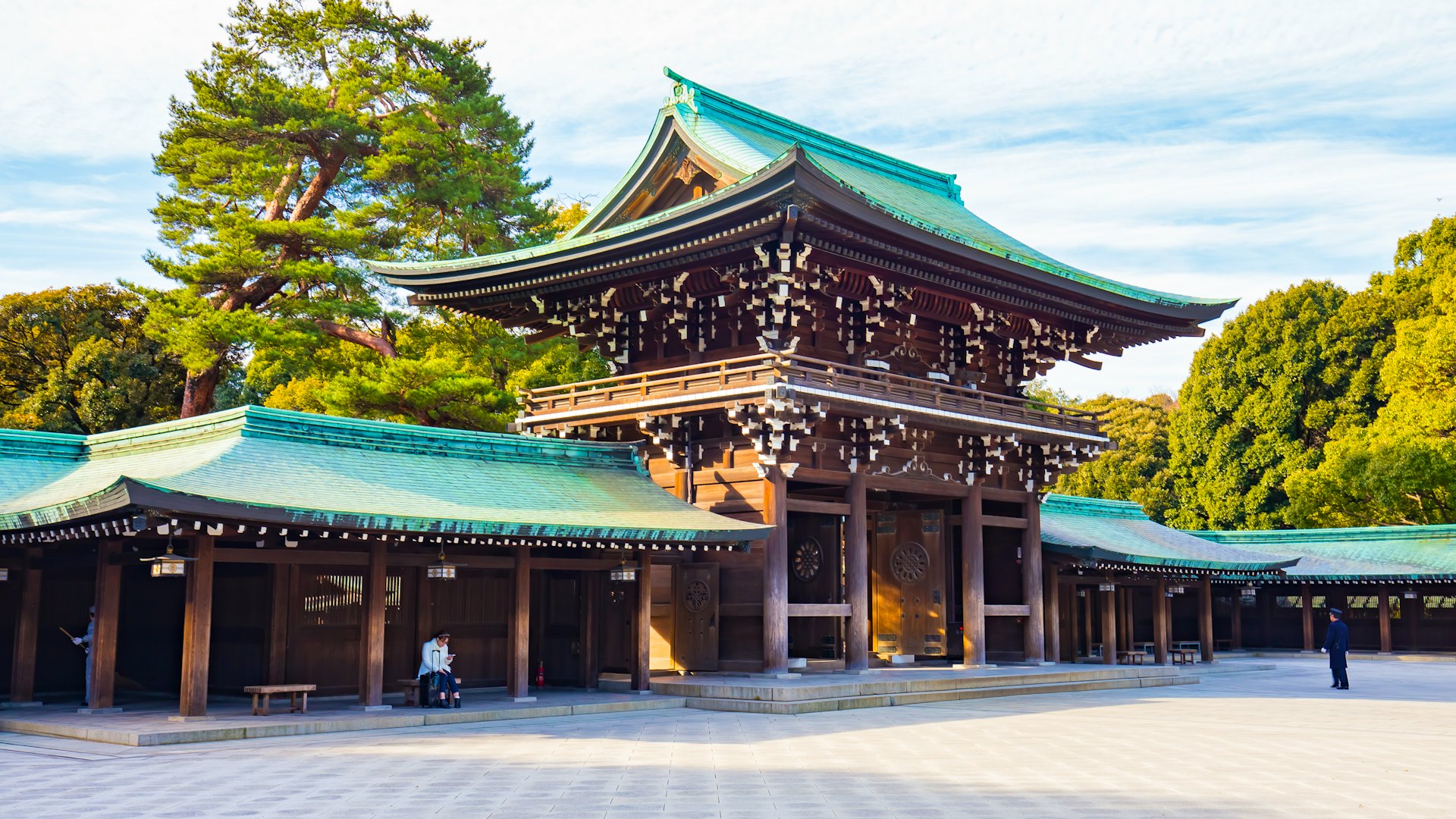
Meiji Jingu Shrine is one of Tokyo’s most important and serene Shinto shrines, dedicated to Emperor Meiji and Empress Shōken, who played a central role in Japan’s modernisation. Completed in 1920, the shrine was destroyed during the World War and reconstructed in 1958 using public donations. Our visit here will be a welcome break from the hustle and bustle of the city and an opportunity to learn more about Shinto rituals.
Tomita Sen Kougei, founded in 1882, is one of Tokyo’s oldest dye studios. The studio is home to five nationally certified 'Masters of Traditional Craft,' making it one of the few studios in Japan with this level of expertise. Here, we’ll observe a demonstration using Edo Komon and Edo Sarasa techniques and then create our own hand-dyed item. Edo Komon is a form of fine stencil dyeing originally used for samurai garments. Its delicate, repeating patterns are so small they resemble solid colours from a distance yet reveal intricate beauty up close. Edo Sarasa features bold, seasonal patterns and natural motifs in slightly muted tones, rendered with Japanese stencil techniques. Tokyo remains the only place where it is still authentically produced.
Fujiya Dyeing Workshop, founded in 1952, specialises in hikizome (brush dyeing) custom-made, one-of-a-kind pieces. The method, developed in Japan during the first half of the Edo period (1603-1868), uses a brush to dye textiles evenly or blurred without soaking in a dye solution. We’ll enjoy a workshop here, drawing our own design on lightweight cotton using the hikizome technique.
Included Meals
- Breakfast
Highlights
- Hikizome Dyeing Workshop
- Nippori Fabric Town
- Nuno Textiles
- Tomita Sen Kougei Dye Studio
- Meiji Jingu Shrine
The World Quilt Festival in Yokohama, one of the world’s largest, includes an exhibition of around 150 competition quilts, workshops for all levels, a gallery of works from famous quilters and plenty of retail opportunities. We’ll spend a full day here, before returning to our hotel for a farewell dinner.
Included Meals
- Breakfast
- Dinner
Highlights
- Yokohama World Quilt Festival
We transfer to Tokyo Airport for our return flight to London, arriving the same day.
Included Meals
- Breakfast
Please Note: You will need to have a good level of fitness to get the most out of this holiday. We therefore do not recommend this tour for anyone with mobility problems. The itinerary involves a significant amount of walking whilst sightseeing each day, sometimes in warm temperatures and often on rough ground and including steps. Whilst sightseeing is taken at a leisurely pace, for the enjoyment of everyone in the group you should be able to keep up with your fellow travellers.
Accommodation
You will stay for four nights at the 4-star Laguna Hotel in Okinawa, two nights at the 4-star Hotel New Otani Hakata in Fukuoka, three nights at the 3-star Miyako Hotel Hachijo in Kyoto, two nights at the 4-star Hotel Metropolitan in Tokyo and two nights at the 5-star Yokohama Bay Tokyu.
Single supplement is for sole occupancy rooms in Okinawa, Fukuoka and Yokohama and single rooms in Kyoto and Tokyo.
Hotel Metropolitan
The Hotel Metropolitan Tokyo Ikebukuro is an oasis of luxury and comfort in the heart of Tokyo. The 807 rooms come equipped with toiletries, a hairdryer, free Wi-Fi and a refrigerator.
Hotel Facilities
- Gym
Room Facilities
- Hairdryer
- Fridge
- Free Wifi

Miyako Hotel Kyoto Hachijo
This 4-star hotel is located in central Kyoto, opposite Kyoto station. The premium floor bedrooms come equipped with high speed internet, refrigerator, tea and coffee making facilities, hair dryer, iron and ironing board,. The hotel also offers a beauty salon, a convenience shop and 6 dining options including buffet restaurant Le Plaisir serving international dishes, Shisen serving Chinese Sichuan cuisine and Restaurant Kyoyamatoya serving Japanese seasonal dishes.
Hotel Facilities
- Bar
- Restaurant
- Iron at Reception
Room Facilities
- TV
- Tea and Coffee Making Facilities
- Hairdryer
- Fridge
- Telephone
- Free Wifi

Laguna Garden Hotel
This 4-star seaside resort overlooks the East China Sea and is set beside a marina, creating a relaxed tropical atmosphere. The well-appointed bedrooms come equipped with modern amenities. Guests can enjoy a variety of dining options, including Okinawan, Japanese, and international cuisine, as well as a lounge for casual drinks. Other facilities include indoor and outdoor swimming pools, a fitness centre, sauna, and spa services.
Hotel Facilities
- Bar
- Restaurant
- Indoor and Outdoor Swimming Pool
- Sauna or Steam Room
- Gym
Room Facilities
- TV
- Hairdryer
- Safe Box
- Fridge

Hotel New Otani Hakata
A well-established 4-star full-service hotel located in the heart of Fukuoka city’s central area, perfectly close to major shopping areas, and local attractions. Guest rooms, designed for comfort and functionality, are equipped with free Wi-Fi, flat-screen TVs, refrigerators and hairdryers. Four restaurants offer a range of dining experiences.
Hotel Facilities
- Bar
- Restaurant
- Indoor and Outdoor Swimming Pool
- Sauna or Steam Room
- Gym
Room Facilities
- TV
- Hairdryer
- Safe Box
- Fridge

Yokohama Bay Tokyu
This 5-star luxury hotel is in the heart of the vibrant Minato Mirai waterfront district in Yokohama just steps from the Pacifico Yokohama Convention Centre. The 480 spacious guest rooms come equipped with free Wi-Fi, comfortable beds, and modern conveniences. High quality dining experiences include an international buffet with seasonal offerings, elegant French cuisine and Japanese dining. Other facilities include indoor pool (payable), spa and wellness centre.
Hotel Facilities
- Bar
- Restaurant
- Indoor and Outdoor Swimming Pool
- Sauna or Steam Room
- Gym
Room Facilities
- TV
- Hairdryer
- Safe Box
- Fridge


