Filter Holidays
Find your
next holiday
Filter
Holidays
Sign Up to Emails
Subscribe to our email newsletter and find out the latest news, updates and offers first!

Textile Traditions of Uzbekistan
15 days from £4,129pp
Your Tour Includes
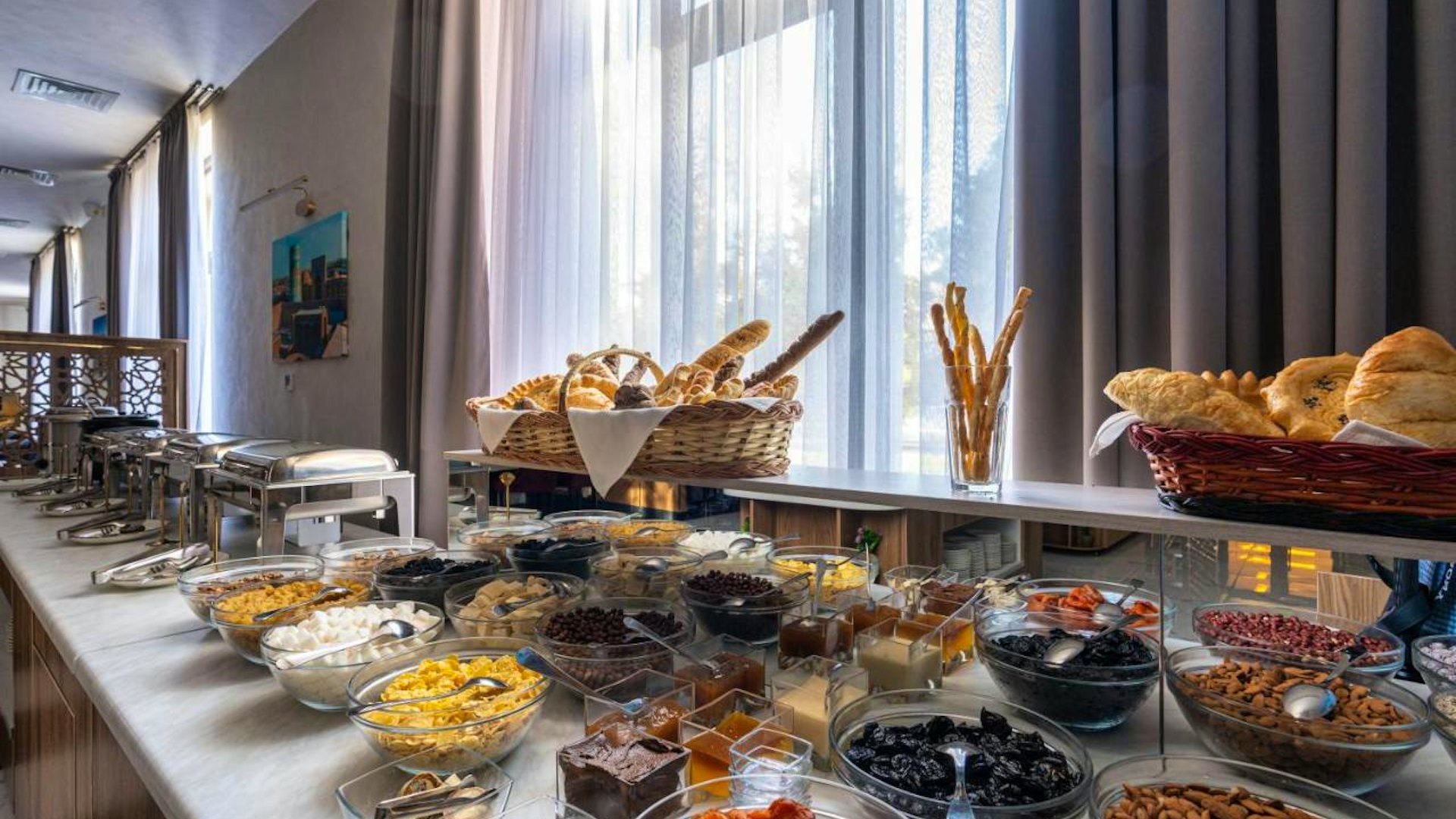
- 14 nights half-board accommodation, breakfast and dinner included
- Economy class flight Tashkent to Urgench
- Business class train travel Tashkent to Kokand return, and Khiva to Bukhara and Bukhara to Samarkand, with luggage transferred by road
- Local English-speaking guide to accompany the tour throughout
- Travel by air-conditioned coach
- Sightseeing, entrance fees and workshops as described
- 3 hand-stitching workshops with Kim, kit and refreshments included
- Services of an experienced Tour Manager
- 0.5l mineral water daily
- Map of Uzbekistan
- Tourist tax
- Tips for drivers and local guides
- Porterage at hotels
Experts





Itinerary
Please choose your preferred 15 day itinerary
Project information: Coming soon!
If you have booked our flight inclusive package, meet your expert, Tour Manager and fellow guests at a London airport for your flight to Tashkent, via Istanbul. On arrival we will be met by our local guide and driver and transfer to our hotel.
If you have booked our join direct package, make your own way to the hotel in Tashkent.
Tashkent is the capital and largest city in Uzbekistan. As with all the cities we will visit on this tour, it has long been an important stop along the ancient Silk Road, connecting East and West through trade and cultural exchange. Today, Tashkent is a modern city known for its wide boulevards, green parks, impressive architecture, and vibrant markets. Our activity here will take in both Tashkent’s rich heritage as well as its ongoing development as we explore historical landmarks, admire contemporary buildings, and visit museums.
We’ll make a relaxed start to the day, as we recover from our travels the previous day.
Tashkent Applied Art Museum is one of Uzbekistan's most significant cultural institutions, dedicated to preserving and showcasing the country's rich artistic heritage. Housed in the beautifully decorated former residence of a Russian diplomat, the museum is itself a masterpiece of traditional Uzbek craftsmanship, featuring intricate wood carvings, colourful ceramic tiles, and finely painted ceilings. The museum houses a collection of over 7,000 items including ceramics, textiles, embroidery, jewellery, metalwork, wood carving, and other handcrafted works created by skilled artisans from across the country from the 19th century to the present day.
This afternoon we’ll enjoy our first hand-stitching workshop with our expert in a meeting room at our hotel. Refreshments will be provided.
Tashkent City Park is one of the city's most popular destinations in the evenings. The illuminated fountains, landscaped gardens, and tree-lined walkways attract locals and tourists alike. After dinner we'll enjoy a leisurely walk admiring the surrounding contemporary architecture and watching the spectacular fountain shows before returning to our hotel.
Included Meals
- Breakfast
- Dinner
Highlights
- Workshop
- City Park
- Applied Art Museum
This morning we travel by train to Kokand.
Kokand is one of Uzbekistan's oldest and most historically significant cities, located in the fertile Fergana Valley. Today, the city is renowned for its rich architectural heritage and on arrival we’ll visit two examples of this; Khudoyar Khan Palace and Juma Mosque.
Khudoyar Khan Palace is one of the finest examples of 19th-century architecture in Uzbekistan. The palace was originally an enormous royal complex containing more than 100 rooms, grand courtyards, and beautifully decorated halls. Although only a portion of the original structure remains today, it continues to impress with its magnificent façade, adorned with vibrant glazed ceramic tiles, intricate geometric patterns, and elegant arches.
Juma Mosque, originally constructed in the early 19th century and later restored, is renowned for its spacious prayer hall and impressive collection of carved wooden columns, many of which are crafted from centuries-old elm wood. The interior showcases finely carved woodwork and colourful painted ceilings.
Our tour continues to Dangara, well known for its tradition of wood carving. Using locally sourced hardwoods such as walnut, elm, and plane tree, craftsmen create pieces with intricate decorative patterns that are widely used in the production of doors, columns and window frames as well as household furnishings. We’ll see that each piece is handcrafted using traditional tools and techniques and how these local studios continue to train young artisans, ensuring that this centuries-old craft is passed on to future generations
Our final stop of the day is in Rishtan, internationally renowned as one of the oldest and most important centres of ceramic production in Central Asia. Rishtan ceramics are famous for their vibrant blue-green palette, achieved by using a natural glaze made of plant-based ash combined with minerals, known locally as “ishkor.” We’ll see how artisans shape their works from the local red clay, then hand-paint patterns inspired by nature and geometric designs.
Included Meals
- Breakfast
- Dinner
Highlights
- Khudoyar Khan Palace
- Dangara wood carving
- Juma Mosque
- Rishtan ceramics
Margilan is best known for its high-quality silk fabrics, particularly the atlas and adras textiles, admired for their vibrant colours and intricate patterns. These fabrics are still produced using time-honoured methods in local studios and at the renowned Yodgorlik Silk Factory, where we'll observe the entire process from silkworm cultivation to handweaving
Said Ahmad Khoja Madrasa, a former religious school, is today a craft and artisan centre. Former student rooms have been adapted into small studios where we’ll see local artisans producing and selling silk products, embroidery, ceramics, and souvenirs.
Included Meals
- Breakfast
- Dinner
Highlights
- Yodgorlik Silk Factory
- Said Ahmad Khoja Craft & Artisan Centre
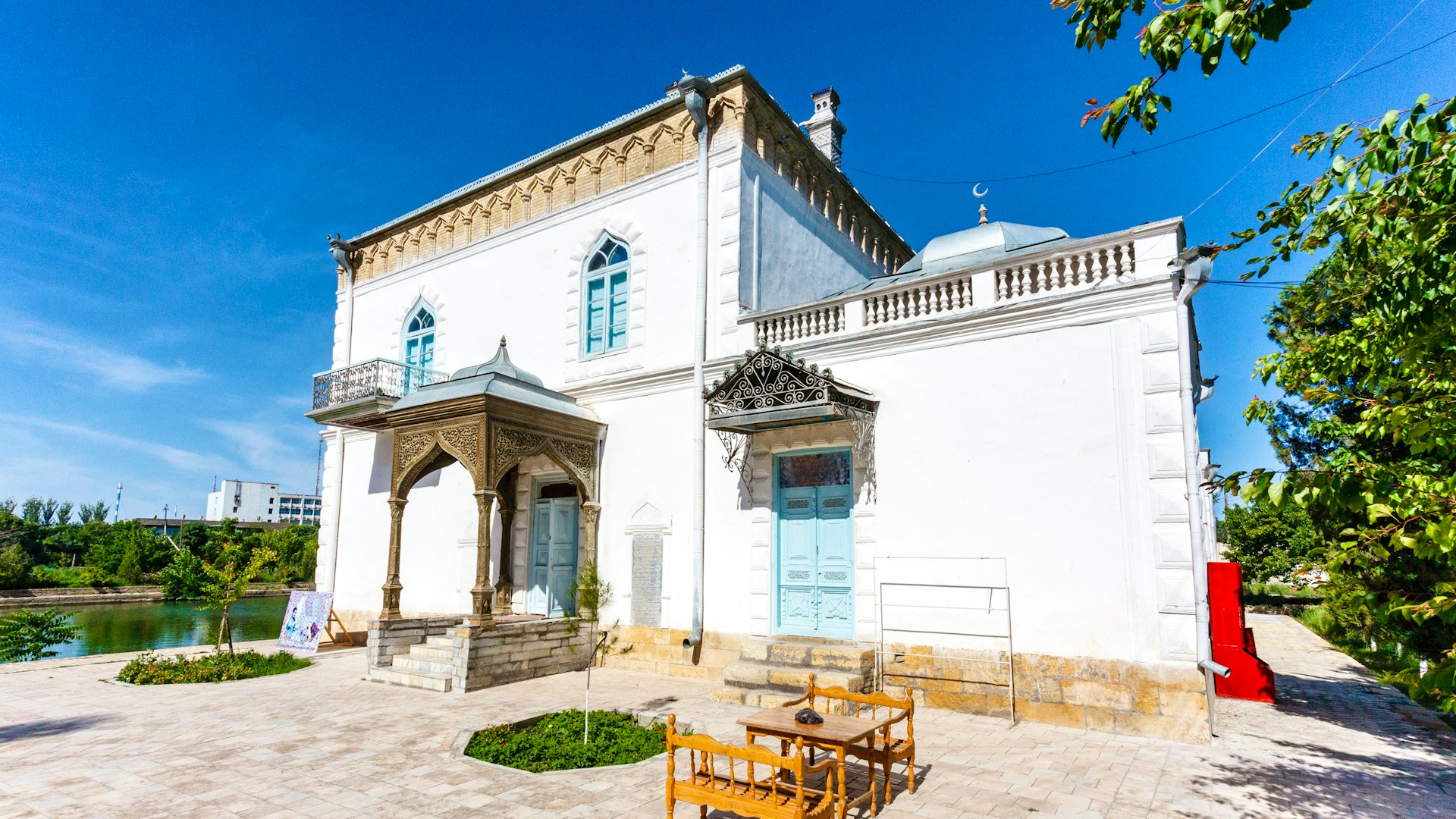
This morning we return to Tashkent, where we will continue our city tour. Highlights of the day include Amir Temur and Independence Squares, Prince Romanov’s Former Palace, Alisher Navoi Theatre; one of the leading centres of performing arts in Central Asia and Akbar Rahimov’s Pottery School, one of the most respected centres for ceramic art in Uzbekistan. Here master artisans guide students through each stage of the process, with a particular focus on the distinctive styles of Uzbek ceramics. The school began in the mid 20th century and is now run by the founder’s son and grandson. Tashkent’s metro stations are also a major attraction in the city. Each station is designed with its own architectural theme making the metro an underground museum of art and culture as well as a means of transport. Many stations are richly decorated with marble columns, mosaics, chandeliers, carved stone, and ceramic artwork that reflect Uzbek history, national identity, and Soviet-era artistic styles. We’ll visit a few of these during our tour.
Included Meals
- Breakfast
- Dinner
Highlights
- City Tour
We fly to Urgench this morning and continue by road to Khiva.
The heart of Khiva is Itchan Kala, the walled inner city, recognized as a UNESCO World Heritage Site. Enclosed by massive mud-brick walls, Itchan Kala contains an exceptional collection of mosques, madrasas, palaces, mausoleums, and minarets, many of which date from the 18th and 19th centuries. We’ll explore these on our city tour today.
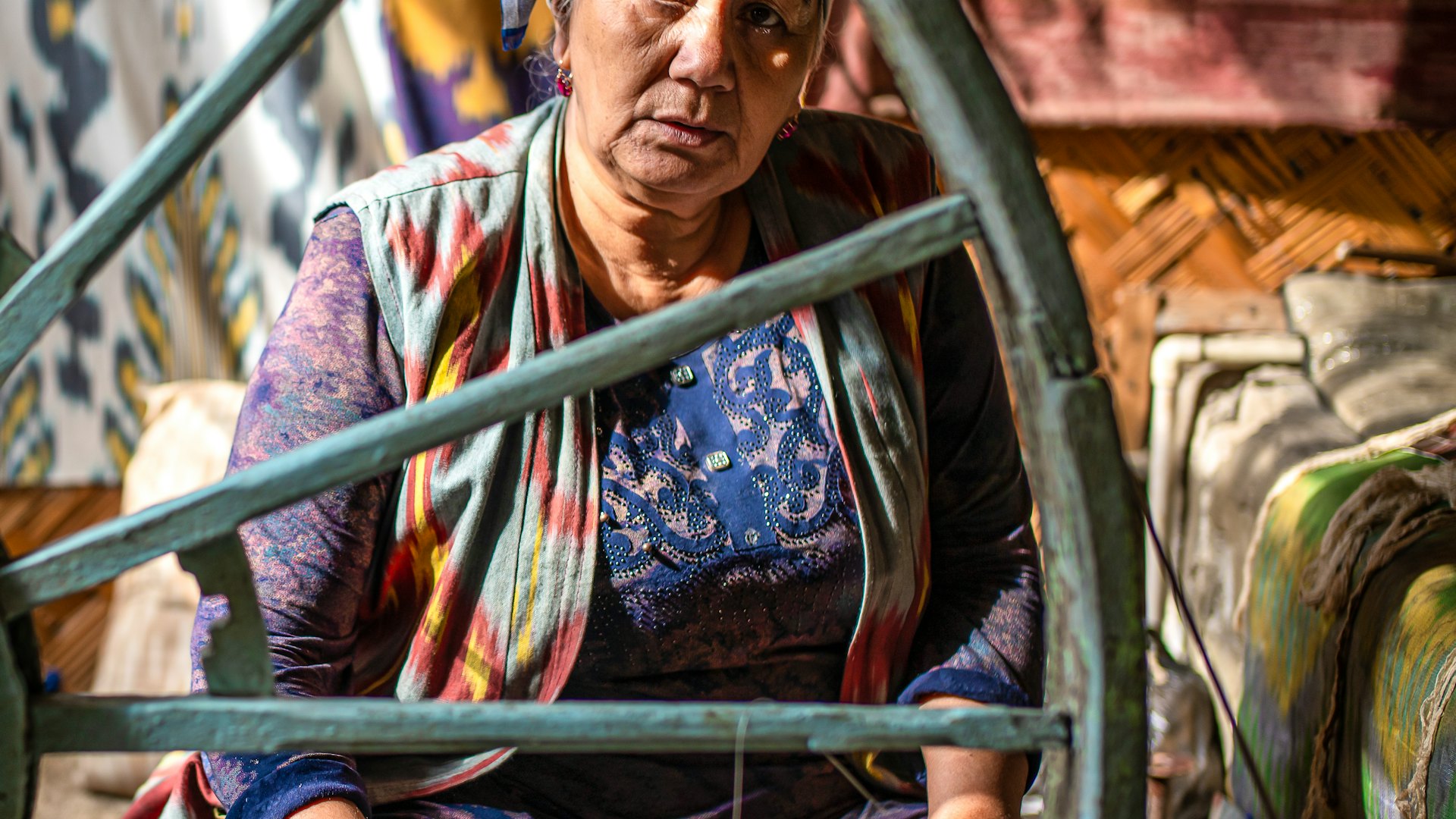
The United Nations Development Programme (UNDP) studios were established to preserve Uzbekistan's traditional handicrafts while creating sustainable employment opportunities for local communities. The studios focus on reviving traditional crafts such as carpet weaving, silk embroidery (suzani), wood carving, and natural dyeing. Here we’ll observe skilled craftsmen and women at work using traditional techniques that have been passed down through generations.
The Khiva Silk Carpet Studio is one of Uzbekistan's leading centres for traditional carpet weaving and textile craftsmanship. Established in 2001 as a joint initiative of UNESCO and the international humanitarian organization Operation Mercy, the studio was created to revive the nearly forgotten art of silk carpet weaving and natural dyeing while providing sustainable employment for local artisans, particularly women. Here we’ll see skilled weavers producing silk carpets using locally spun silk dyed with natural pigments. The intricate patterns often reflect the blue-tiled architecture, carved wooden doors, and geometric ornamentation that characterize Khiva's historic monuments.
Our final visit of the day will be to a traditional local bakery making Khorezmian bread (non), a distinctive part of the culinary heritage of this region of Uzbekistan. Before baking, the dough is decorated with intricate patterns using a traditional bread stamp called a chekich, giving each loaf its characteristic appearance. The bread is baked in a clay oven (tandir), where the intense heat produces its distinctive aroma and texture.
Included Meals
- Breakfast
- Dinner
Highlights
- United Nations Development Programme Studios
- Itchan Kala
- Khorezmian bakery
- Silk Carpet Studio
Today we travel to Bukhara, renowned for its rich tradition of handicrafts, including gold embroidery (zardozi), silk carpet weaving, embroidery, ceramics, miniature painting, wood carving, metal engraving, and jewellery making.
Included Meals
- Breakfast
- Dinner
Highlights
- Bukhara
A full day in Bukhara as we trace the history of traditional crafts, architecture and commerce in the city.
Bukhara Crafts Development Centre is a non-governmental organisation established in 1997 to preserve, revive, and promote Uzbekistan’s traditional handicrafts. It has played a leading role in restoring nearly 60 craft traditions, supporting the transmission of skills through the master–apprentice (ustoz–shogird) system, and creating employment opportunities, particularly for women and young people. Here we’ll see artisans practising gold embroidery, carpet weaving, ceramics, wood carving, metal engraving, miniature painting, jewellery making, and other traditional crafts.
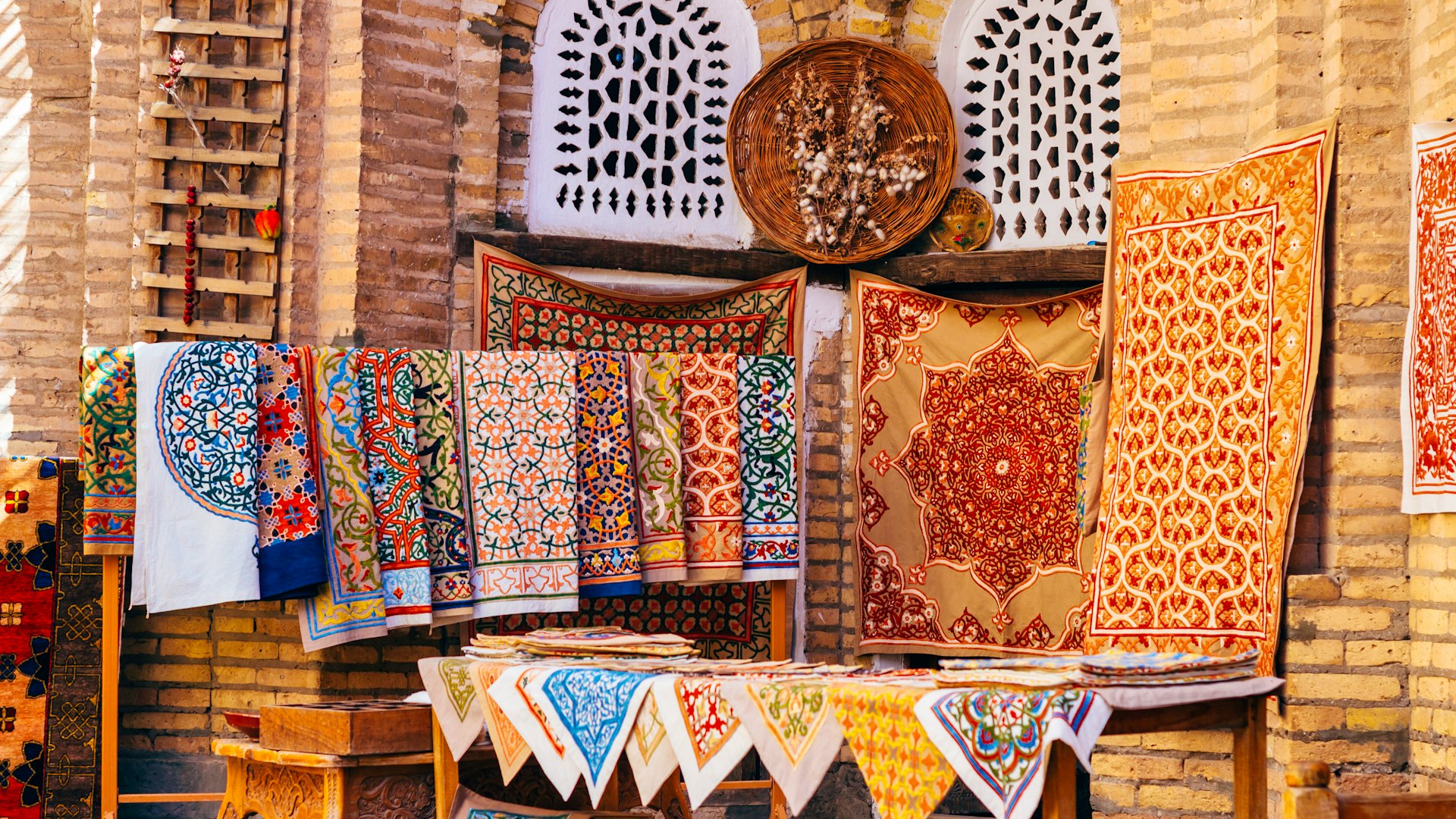
The city’s iconic monuments are concentrated within its compact centre, including the magnificent Poi Kalyan Complex, home to the vast Kalyan Mosque and the Mir-i Arab Madrasa, which remains an active centre of Islamic learning. Nearby, the refined Ulugh Beg Madrasa and the richly ornamented Abdulaziz Khan Madrasa reflect different stages in the evolution of Bukharan architectural style. Alongside these monumental landmarks Bukhara’s commercial heritage is preserved in its historic trading spaces. The trading domes (toqi), built mainly in the 16th century, once organised merchants and artisans into specialised markets while providing shelter from the desert climate. Today, these domed bazaars remain vibrant hubs where we'll find colourful handmade Suzani embroidery, gold-thread textiles, clothing, jewellery, and carpets.
At Bukhara Silk Market the city’s reputation as a historic centre of textile production is still very much alive. Here we’ll find handwoven scarves, richly patterned garments, embroidered fabrics, and traditional ikat textiles, many still produced using techniques passed down through generations.
This evening we will dine at Rahmon House, located in the historical Jewish quarter, where we will see a demonstration of cooking Uzbekistan’s national dish, plov and a folk show.
Included Meals
- Breakfast
- Dinner
Highlights
- Crafts Development Centre
- City tour
- Rahmon House
- Silk Market
This morning we will take an excursion to Gijduvan to take part in an embroidery workshop at Alisher Nazrullayev’s house, home and studio of one of Uzbekistan’s most respected master ceramists which also serves as a centre for other crafts.
On our return to Bukhara, we will enjoy a herbal tea tasting and fashion show at Retro Saloon Timur, followed by a hand-stitching workshop with our expert at the hotel.
Included Meals
- Breakfast
- Dinner
Highlights
- Retro Saloon Timur
- Gijduvan
- Workshop
Today is dedicated to learning about local embroidery. At Rahmon’s House we’ll take a Suzani embroidery masterclass with a local expert. We will also visit the gold embroidery factory whose products include carpets, curtains, dressing gowns, head scarves, handbags, purses and shoes. Sitorai Mokhi-Khosa Palace is one of Bukhara’s most elegant and historically significant royal residences. Built in the late 19th and early 20th centuries and designed as a luxurious retreat from the heat of the city, it served as the summer palace of the last emirs of Bukhara. Today it functions as a museum displaying furniture, decorative arts, clothing, and personal belongings of the emir’s household including a rich collection of local Suzani embroidery.
Included Meals
- Breakfast
- Dinner
Highlights
- Sitori-I-Mokhi Khosa
- Gold Embroidery Factory
- Rahmon’s House
Our time in Bukhara comes to an end as we conclude our visits to the city’s main monuments.
Ark Fortress served as the royal residence of the Emirs of Bukhara as well as functioning as a fortified complex that housed the ruler, his court, military commanders, and administrative institutions. Its origins date back to at least the 5th century, but over time it has been repeatedly rebuilt and expanded. Opposite we find Bolo Hauz Mosque. Built in 1712, it served as a royal mosque for the Emirs of Bukhara and is best known for its beautifully decorated wooden veranda (iwan). Magoki-Attori Mosque is one of the oldest surviving mosques in Bukhara, now a small museum of carpets and textiles.
This afternoon we travel by train to Samarkand, one of the oldest continuously inhabited cities in Central Asia. Samarkand reached its greatest prominence in the 14th and 15th centuries, when it became the capital of Uzbekistan during the Timurid Empire, when the city was transformed into a magnificent imperial city. Many of its most iconic monuments date from this golden age. Today, Samarkand is a UNESCO World Heritage Site and one of the most visited cities in Uzbekistan.
Included Meals
- Breakfast
- Dinner
Highlights
- Bukhara City tour
- Samarkand
Registan Square is the most iconic landmark in Samarkand and one of the finest examples of Islamic architecture in the world. The square is framed by three magnificent madrasas: Ulugh Beg Madrasa (15th century), Sher-Dor Madrasa (17th century), and Tilla-Kari Madrasa (17th century). Together, these monumental buildings are renowned for their symmetry, grand scale, intricate decorative tilework, and towering entrance portals. When darkness falls, the square is illuminated by carefully placed lights that highlight the symmetry and grandeur of the madrasas.
Happy Bird Craft Centre serves as both a studio space and a cultural centre where local artisans create and demonstrate traditional crafts using techniques passed down through generations. The centre is especially known for its ceramics, wood carving and embroidery. The centre also plays an educational role by supporting young apprentices and preserving traditional craftsmanship through hands-on training.
Koni Ghil Silk Paper Studio, located just outside Samarkand, is dedicated to the ancient art of making handmade paper from silk and mulberry bark, a craft dating back to the time of the Silk Road when Samarkand was a major centre of paper production. The workshop preserves traditional methods that were once used to produce some of the finest paper in the medieval world, highly valued by scholars and scribes across Asia and the Middle East. We’ll observe the entire production process.
Included Meals
- Breakfast
- Dinner
Highlights
- Registan Square
- Happy Bird Craft Centre
- Koni Ghil Silk Paper Studio
Urgut Bazaar is one of the oldest and most vibrant traditional markets in Uzbekistan. It retains a very traditional structure, operating as a weekly gathering where traders, farmers, and craftsmen come together to sell their homemade produce. The bustling crowds, open-air stalls, and lively bargaining create an authentic and energetic experience. Here we’ll find handmade textiles, traditional embroidery carpets, leather goods, ceramics, metalwork, and antique items alongside natural herbs and spices, dried fruits, nuts, and local snacks.
On our return to Samarkand, we’ll enjoy our final hand-stitching workshop with our expert in the meeting room at our hotel.
Included Meals
- Breakfast
- Dinner
Highlights
- Urgut Bazaar
- Workshop
The Fine Arts Museum of Samarkand is one of the city’s key cultural institutions, housing an extensive collection from ancient times to the modern era. Exhibits include ceramics, embroidery, wood carving, metalwork, jewellery, and textiles with many pieces highlighting the influence of Silk Road culture, showing how artistic traditions can evolve through interaction between civilizations.
Valentina Romanenko is a fashion designer and couturier, recognized for creating garments that combine traditional Uzbek textile techniques with contemporary fashion design. Natural fabrics such as silk and cotton are commonly used, and many items are hand-finished using embroidery, batik-style decoration, and other artisanal techniques. Here we’ll observe the garment creation process, from fabric preparation and dyeing to cutting, sewing, and decoration and enjoy a fashion show.
Included Meals
- Breakfast
- Dinner
Highlights
- Fine Arts Museum
- Valentina Romanenko
If you have booked our join direct package, your tour ends after breakfast.
With our flight inclusive package, transfer to Samarkand airport for our return flight to London, via Istanbul.
Included Meals
- Breakfast
Tour Notes: You will need to have a good level of fitness to get the most out of this holiday. We therefore do not recommend this tour for anyone with mobility problems. The itinerary involves a significant amount of walking whilst sightseeing each day, sometimes in warm temperatures. Due to the state of pavements in Uzbekistan, our walking often takes place on rough ground and includes steps at the entrance and exit to monuments. Whilst sightseeing is taken at a leisurely pace, for the enjoyment of everyone in the group you should be able to keep up with your fellow travellers. Most of the hotels outside of Tashkent do not have lift access.
Accommodation
You will stay for three nights at the 4-star Inspira S in Tashkent, two nights at the 3-star Silk Road Hotel in Kokand, one night at the 3-star Feruzkhan Hotel in Khiva, four nights at the 3-star Sasha & Son in Bukhara, and four nights at the 3-star Hotel Wellfort in Samarkand.
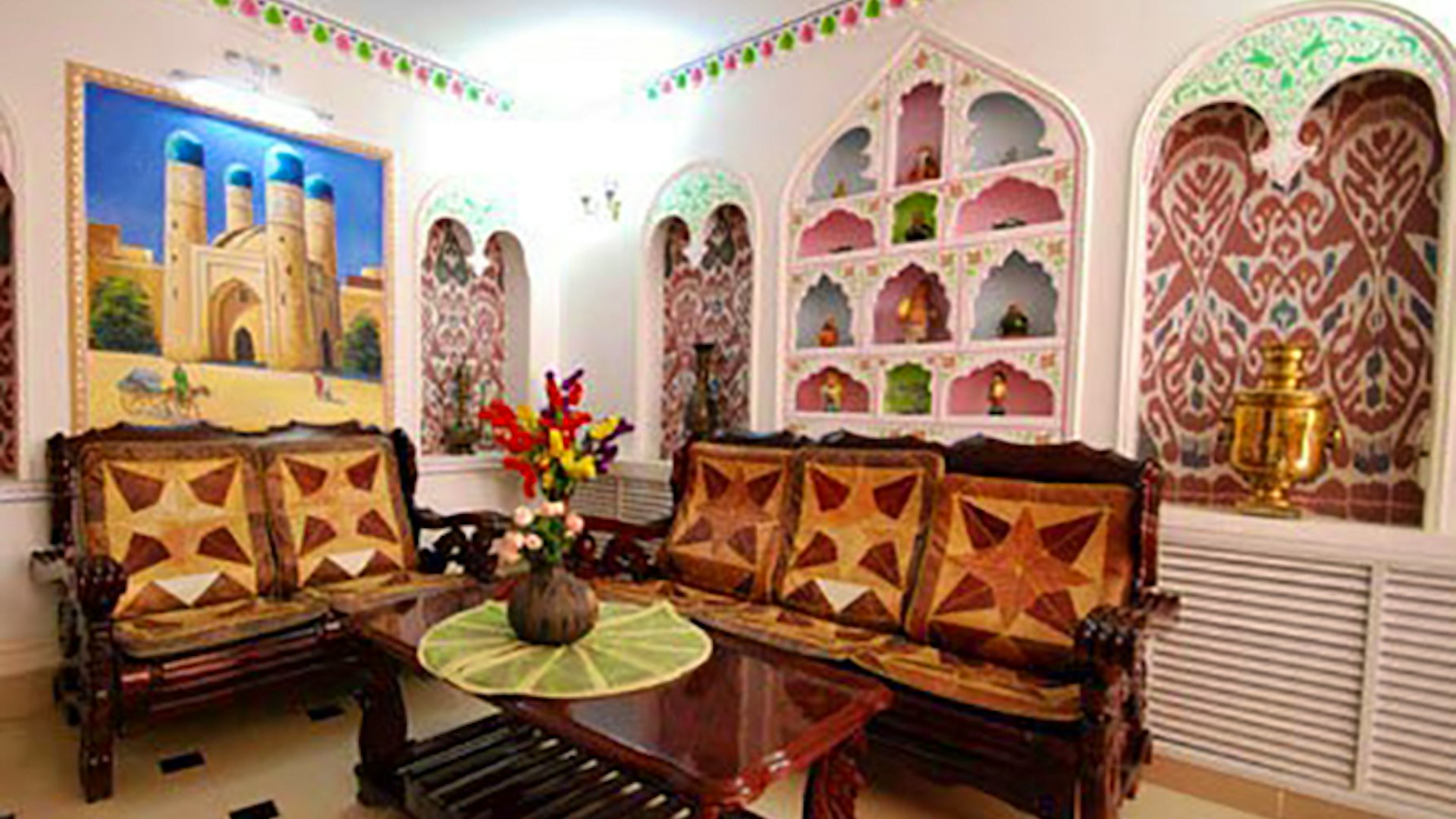
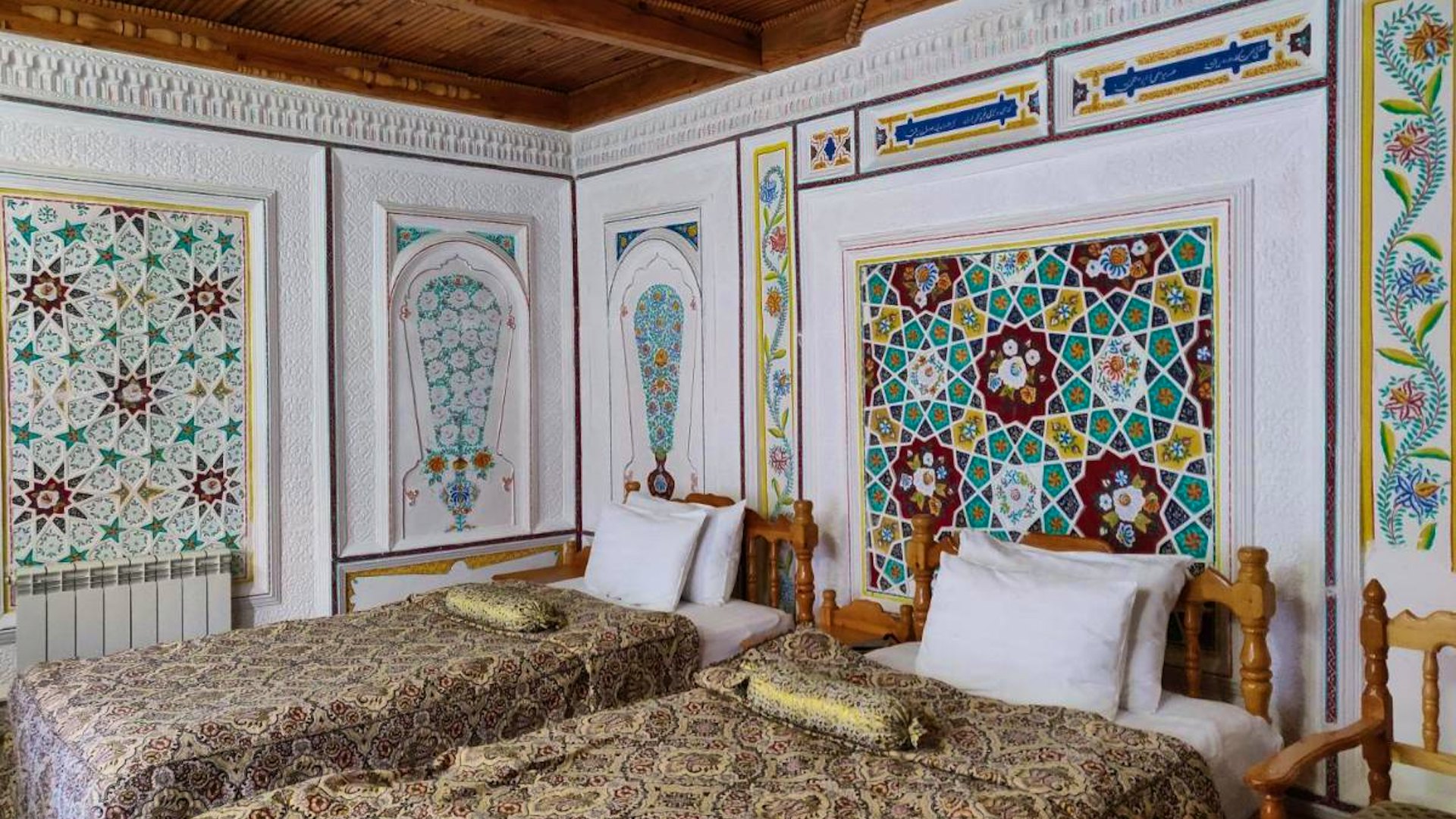
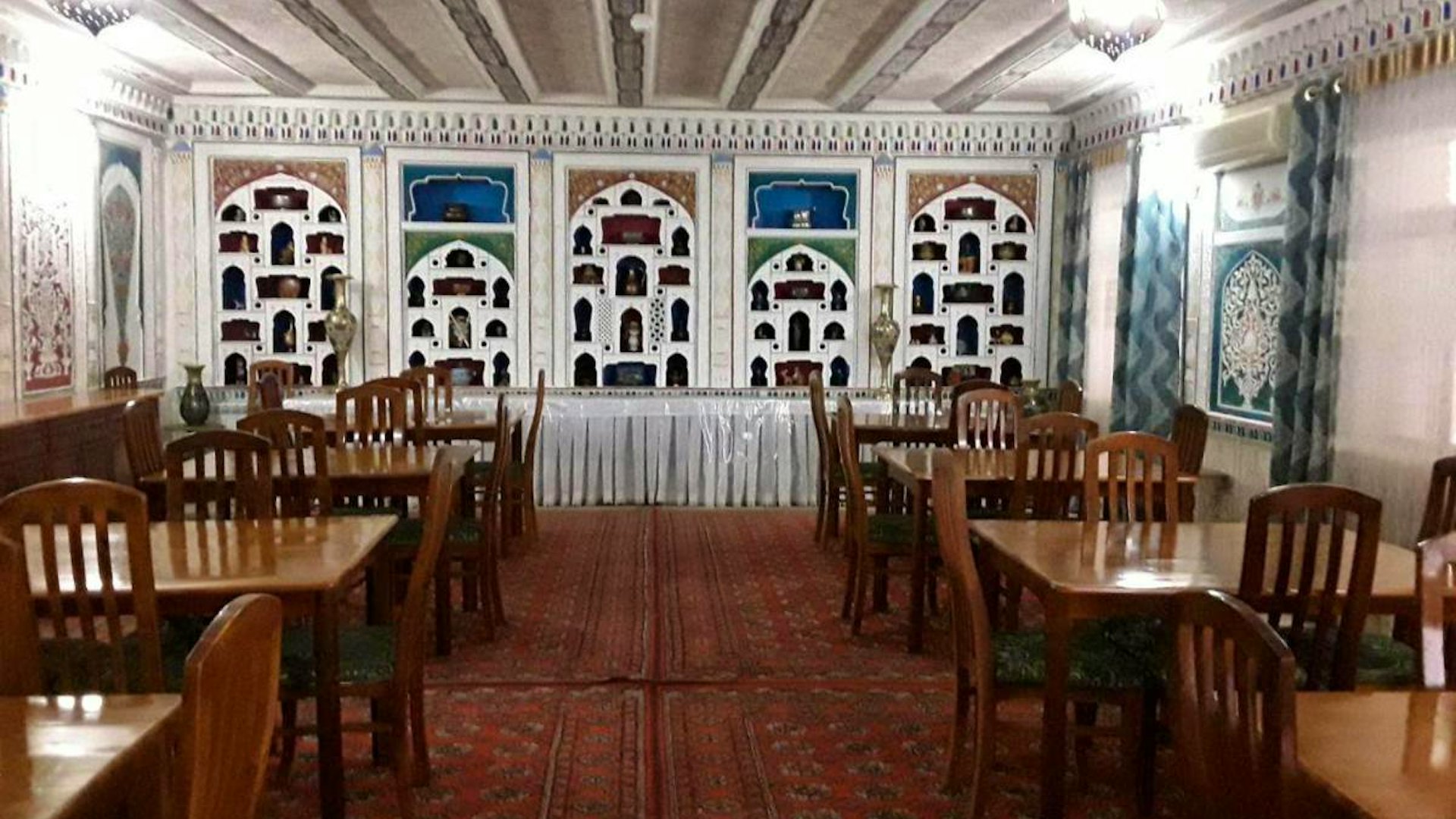
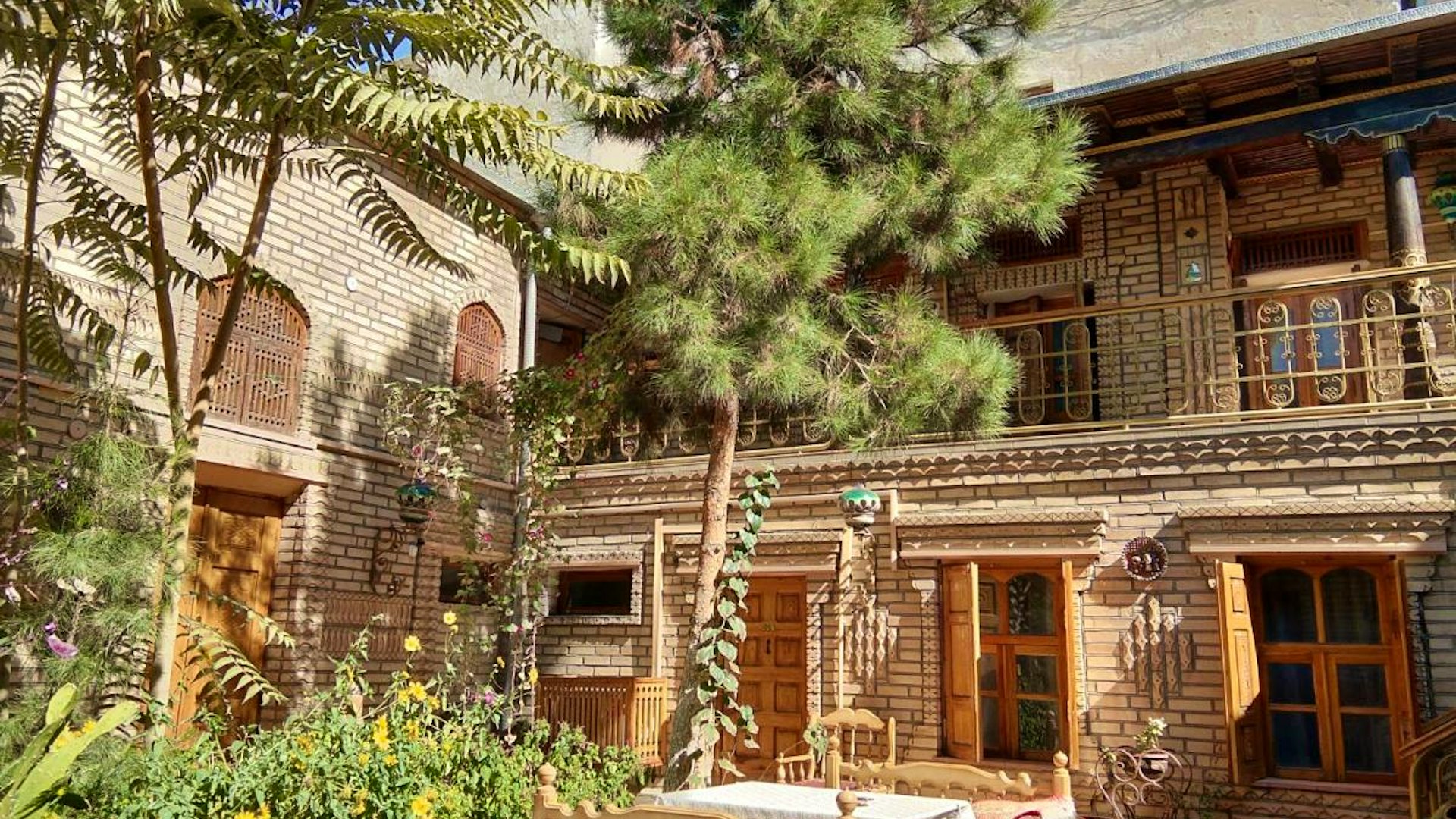
Sasha & Son
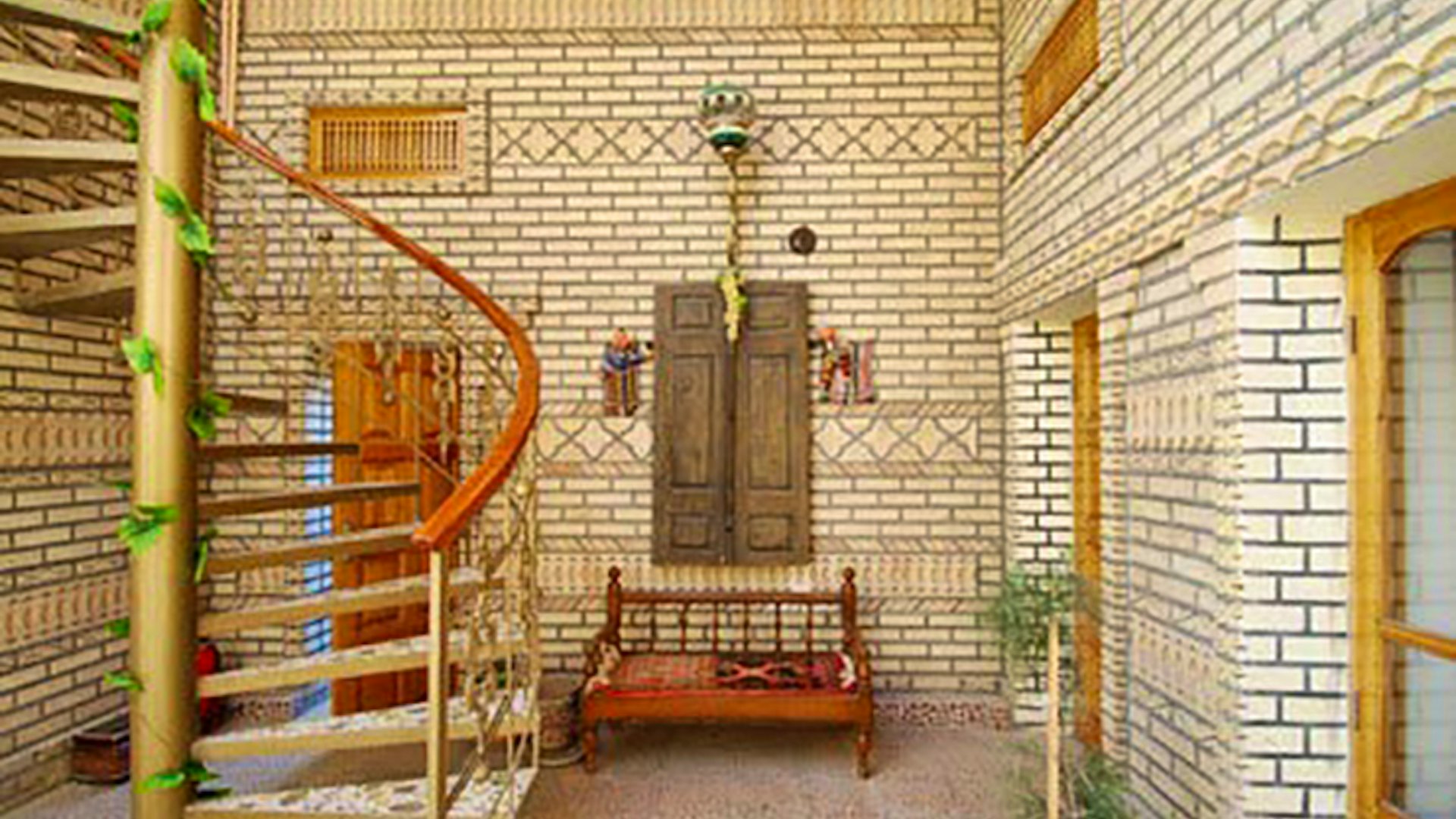
This 3-star boutique hotel, a former Jewish merchant’s house dating back to the 16th Century, offers a homely atmosphere within just a few minutes’ walk from the heart of Bukhara.
Hotel Facilities
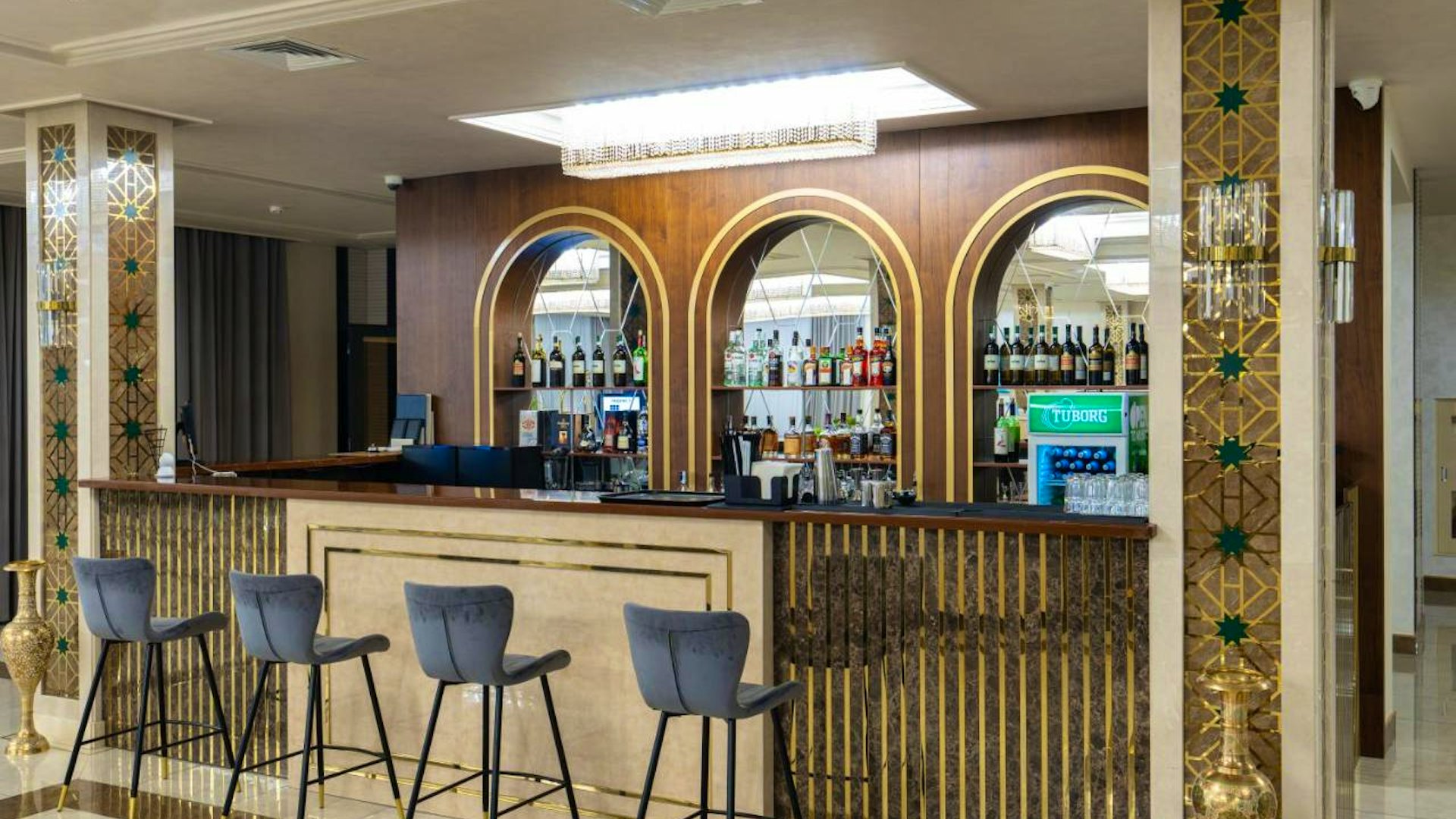
- Bar
- Restaurant
- Laundry Service
Room Facilities
- TV
- Tea and Coffee Making Facilities
- Hairdryer
- Safe Box
- Air Conditioning
- Fridge
- Bath
- Telephone
- Free Wifi
Single Supplement from £570.00
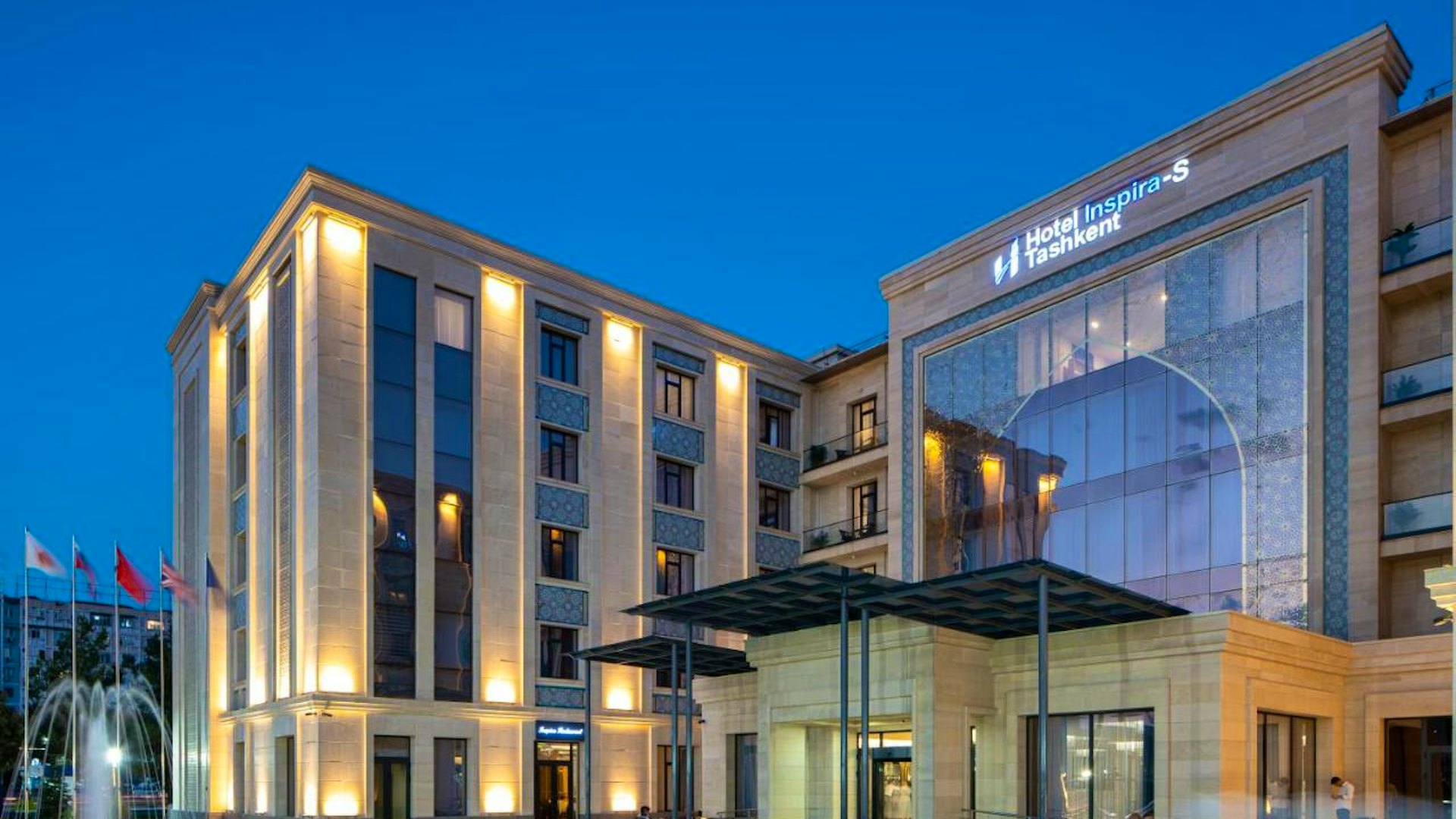
Hotel Inspira S
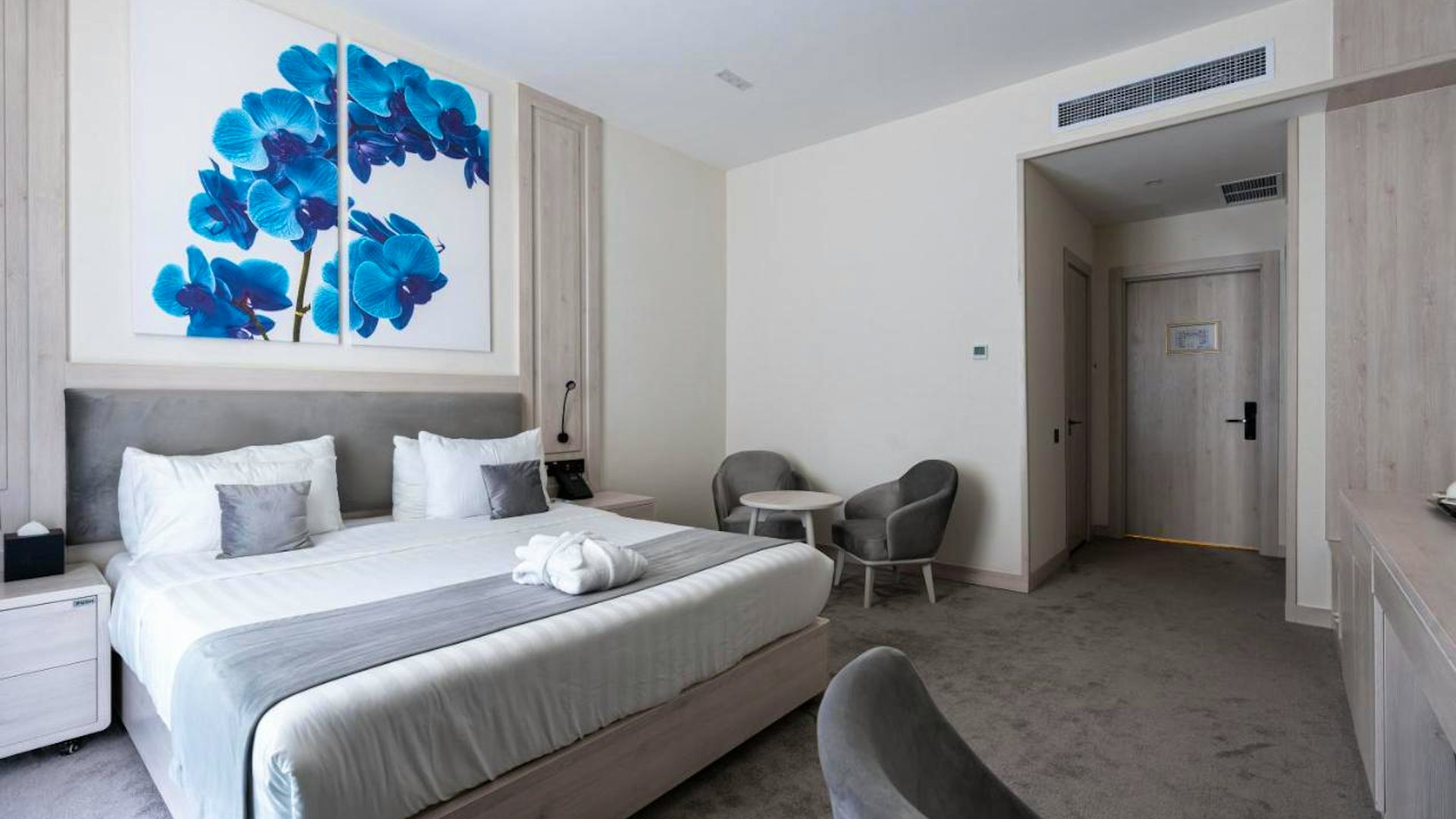
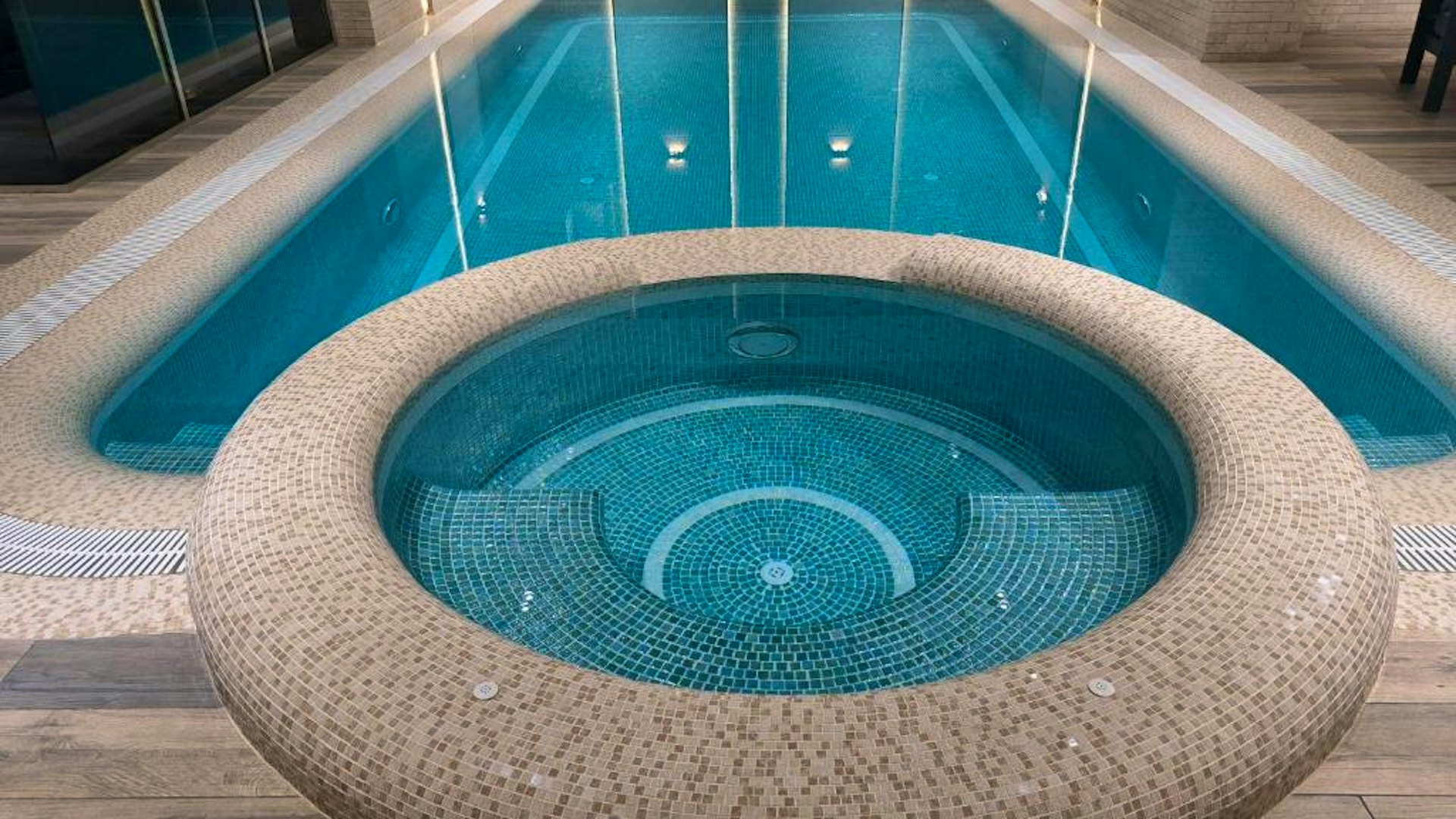
The 3-star Hotel Inspira S. seamlessly combines elegance, sophistication and modern design and is ideally located within walking distance of the famous Chorsu Bazaar. Facilities include a restaurant and bar, along with a spa, including massage rooms, Turkish bath, Finnish sauna, and a gym.
Hotel Facilities
- Bar
- Restaurant
- Indoor Swimming Pool
- Laundry Service
- Sauna or Steam Room
- Gym
Room Facilities
- TV
- Tea and Coffee Making Facilities
- Hairdryer
- Safe Box
- Fridge
- Telephone
- Free Wifi
Single Supplement from £570.00
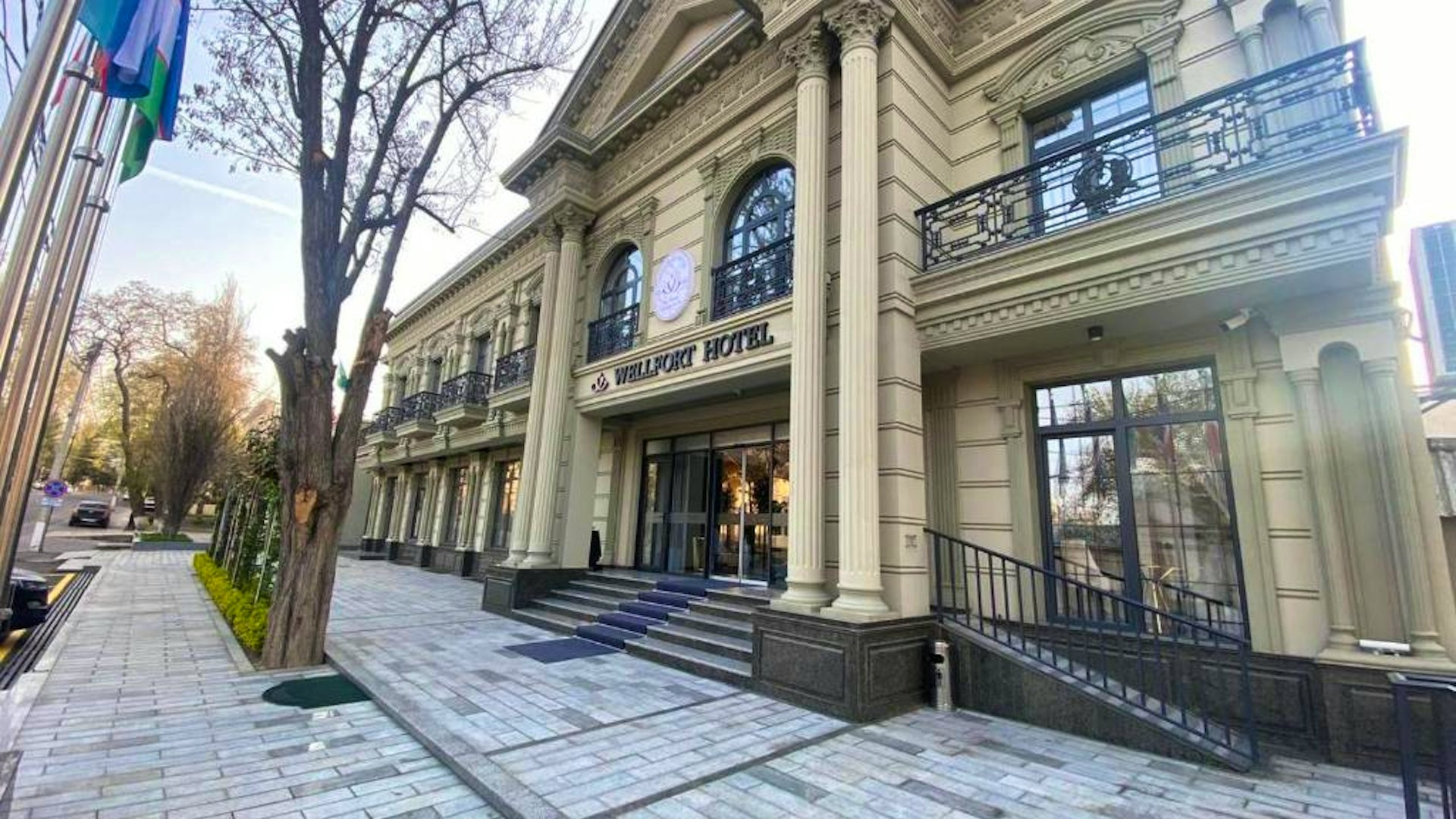
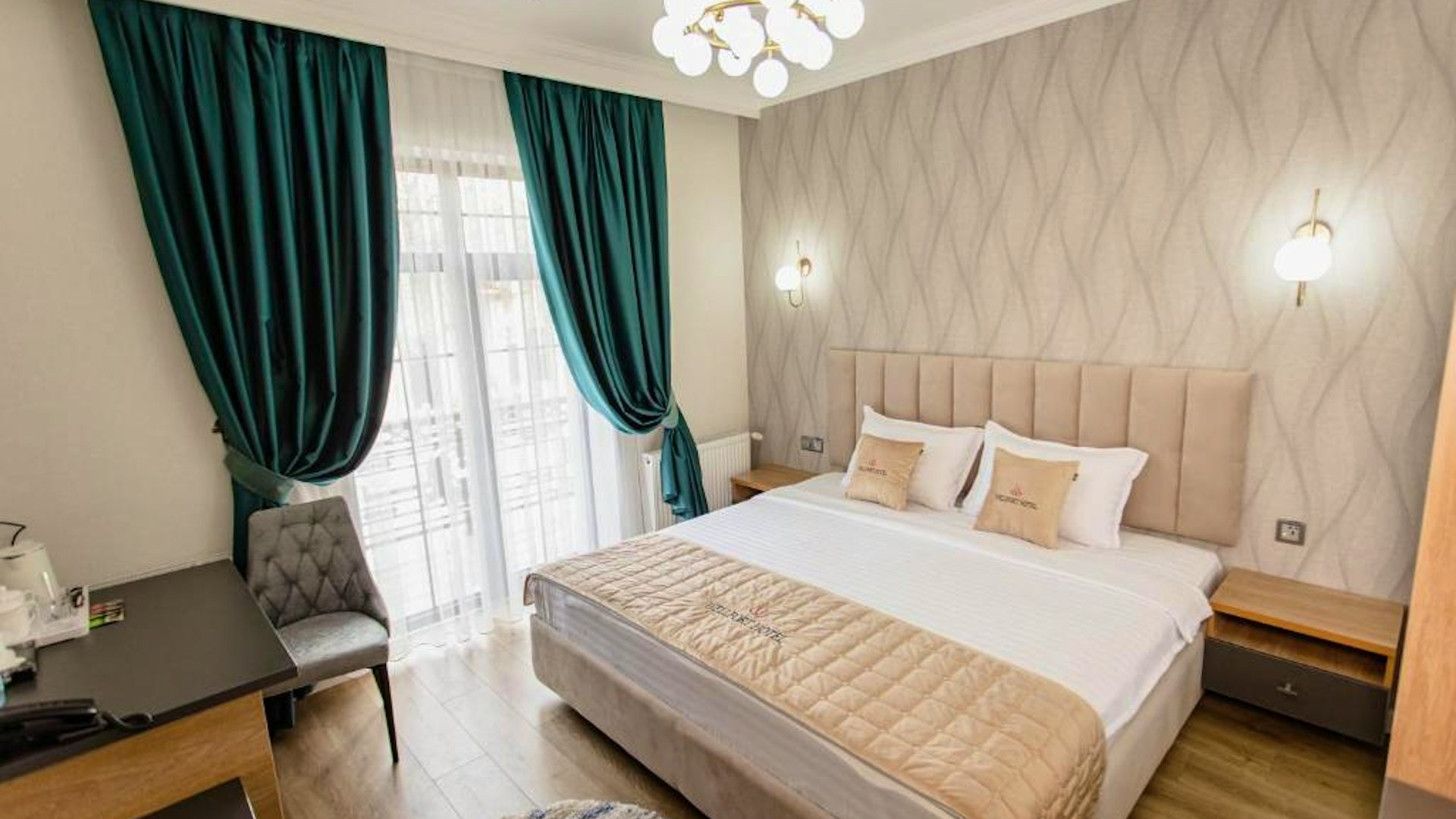
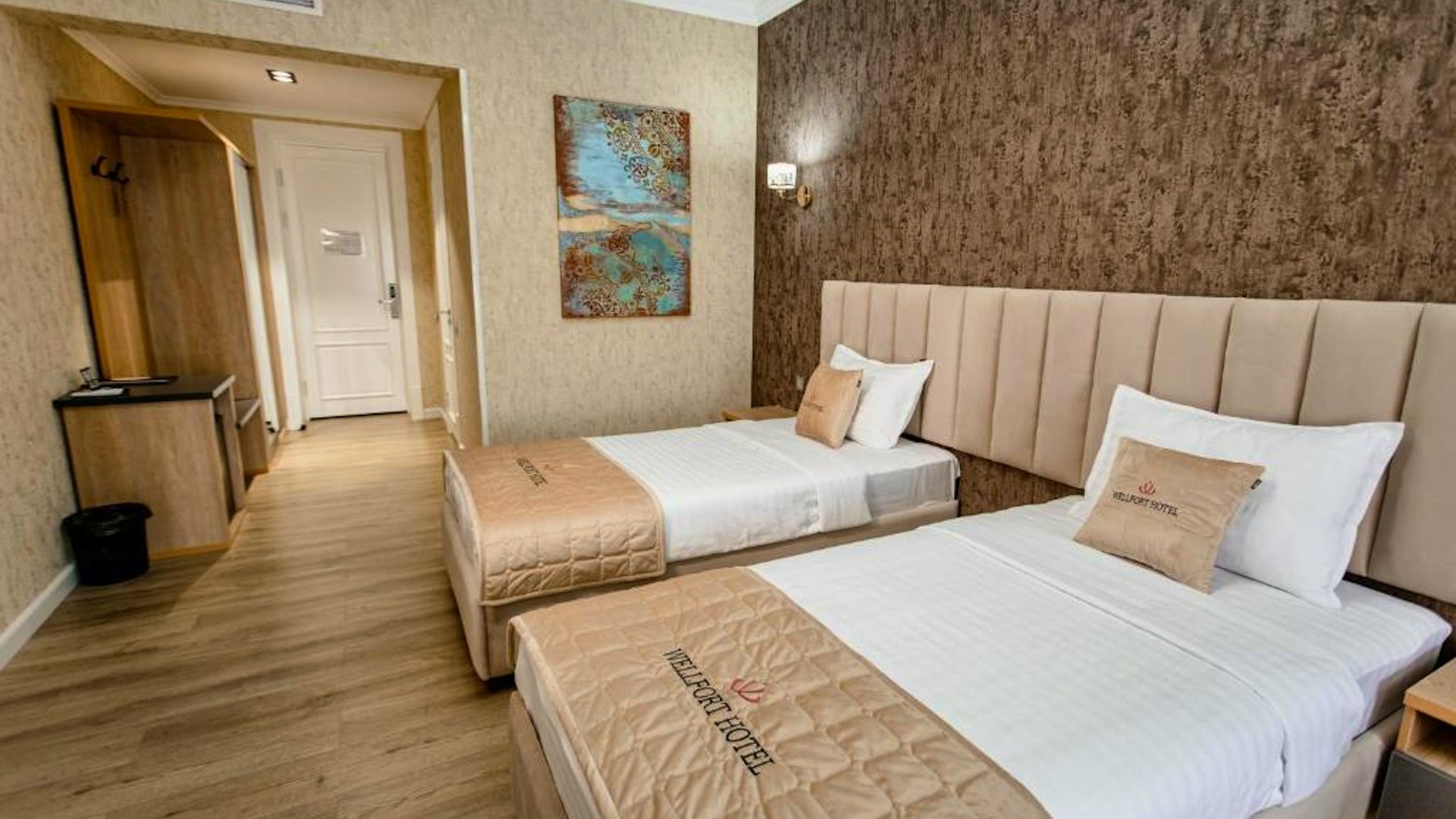
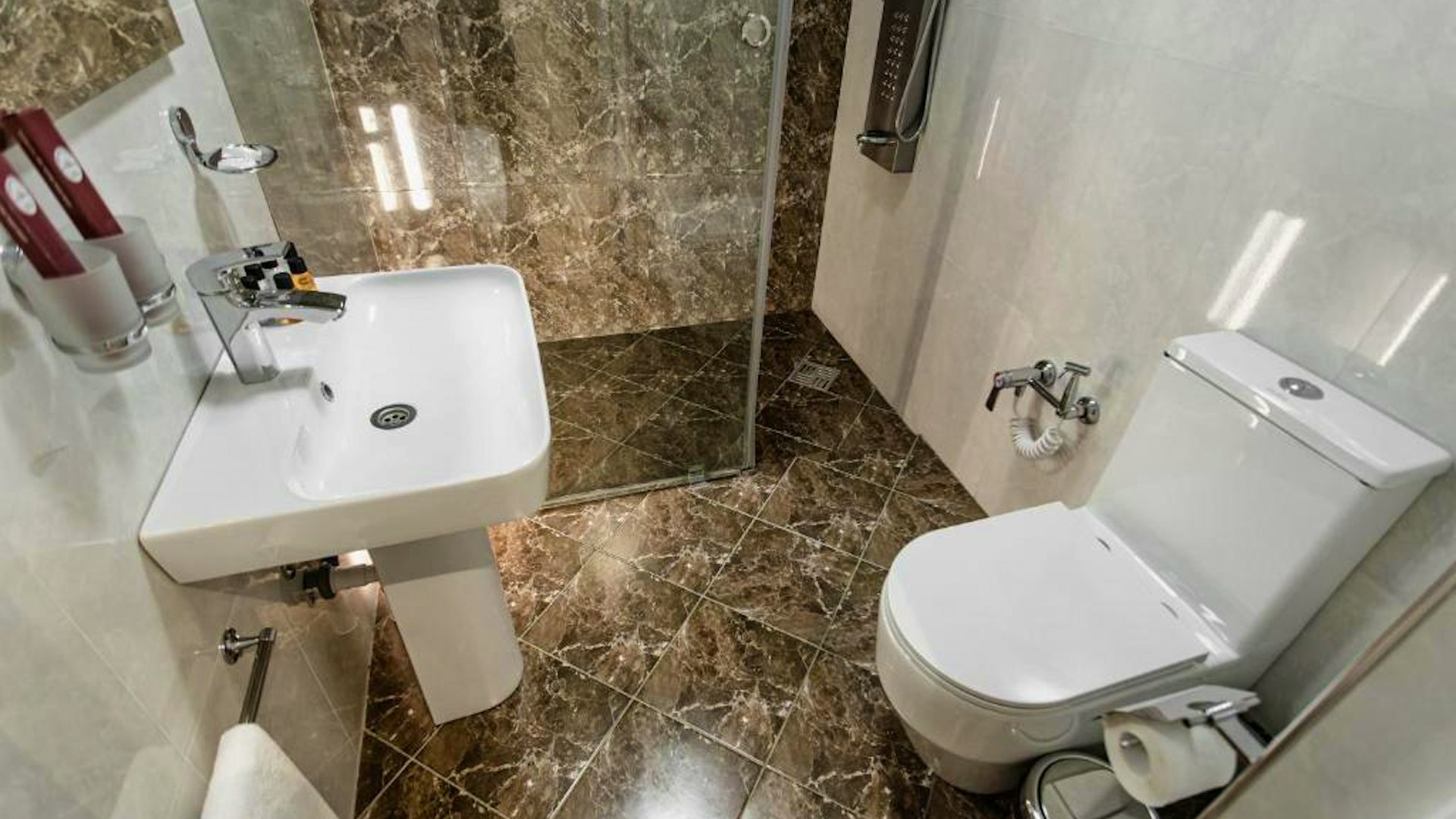
Hotel Wellfort
This brand-new hotel is located close to Samarkand’s Central Park. Each of the 26 bedrooms come equipped with air conditioning, flat screen TV, safe, telephone, hair dryer and refrigerator. Facilities include room service, restaurant and free WIFI.
Hotel Facilities
- Restaurant
- Room Service Available
Room Facilities
- TV
- Hairdryer
- Safe Box
- Air Conditioning
- Fridge
- Telephone
- Free Wifi
Single Supplement from £570.00